
Basement moisture control hinges on choosing the right approach: damp proofing for vapor and capillary issues, or waterproofing for liquid water and hydrostatic pressure. This article explains both methods, clarifies how each mechanism works, and shows when one is sufficient versus when a comprehensive waterproofing system is required. Homeowners often mistake surface dampness for active leaks, which can lead to ineffective repairs or recurring damage; understanding moisture types and pressure dynamics prevents costly mistakes and protects indoor air quality. You will learn what materials and systems are used in damp proofing and waterproofing, how to compare cost, life expectancy, and maintenance, and a practical checklist to decide what your basement needs. The guide also covers risks of incorrect choices, how professional assessment informs the right solution, and the latest sustainable and smart innovations reshaping moisture control as of 2025. Read on to diagnose common basement symptoms and match them to targeted moisture-control strategies like DPCs, membranes, French drains, and sump pump systems.
What Is Damp Proofing and How Does It Control Basement Moisture?
Damp proofing is a treatment designed to reduce moisture transfer by vapor and capillary action through masonry and above-grade foundation walls; it does not resist pressurized liquid water. The method works by creating a barrier that limits moisture diffusion and rising damp, often using coatings, physical courses, or hydrophobic creams that interrupt capillary paths in the wall structure. Damp proofing improves indoor humidity control, reduces efflorescence, and helps prevent mold growth when liquid water is not exerting pressure against the wall. Because damp proofing addresses vapor rather than hydrostatic pressure, it is typically less invasive and lower cost than full waterproofing, but it is only appropriate when the underlying cause is condensation or rising damp rather than active leaks. Understanding these mechanisms clarifies when a homeowner can choose damp proofing as an effective, economical option and when they must consider waterproofing to manage liquid ingress.
What Materials and Methods Are Used in Damp Proofing?
This subsection catalogs common damp-proofing materials and their typical application scenarios to help decide which fits a given symptom set. Damp proofing relies on surface or capillary-blocking solutions that interrupt moisture migration rather than provide pressure resistance. Below is a material-by-material decision aid to compare use cases, advantages, and tradeoffs before selecting a treatment.
| Method/Material | Typical Use Case | Pros | Cons | Lifespan |
|---|---|---|---|---|
| Damp Proof Course (DPC) | Above-grade masonry and historic walls | Long-established, passive barrier | Can be difficult to retrofit in existing walls | 20–50 years (if installed correctly) |
| Bitumen coatings | Exterior above-grade surfaces | Economical, easy to apply | Not designed for hydrostatic pressure; UV sensitive | 10–20 years |
| Masonry creams (silane/siloxane) | Penetrating hydrophobic treatment for brick | Preserves appearance, reduces capillary rise | Limited effect against liquid water pressure | 5–15 years |
| Interior plastic sheeting | Temporary vapor control in non-pressurized areas | Low cost, DIY-friendly | Traps moisture behind finishes if misused | Short-term; months–years depending on use |
 This table shows that damp proofing methods are best matched to vapor or rising-damp scenarios and that each option balances invasiveness, durability, and suitability for retrofits. The next section explains how to recognize when these materials suffice versus when you need a waterproofing system.
Experimental Analysis of Moisture Protection in Buildings
It is known that capillary moisture enters the wall layers through the foundation and plinth walls of buildings in operation and affects their technical condition. The appearance of capillary moisture and its penetration into the layers of walls – the quality of construction work during the construction of buildings, service life (time since construction), air temperature and humidity, ground conditions of the construction site, increase in ground soil moisture, dynamic forces and earthquake effects, caused by the aggressive effects of the environment and others. The main goal of assessing the technical condition of buildings is to establish a comfortable and optimal regime during their use. The problem of rational technical operation of buildings is mainly aimed at keeping them in a satisfactory technical condition with low operating costs. This article presents an analysis of experiments conducted to protect buildings from underground moisture.
Experimental analysis of moisture protection of buildings, E Tulakov, 2024
When Is Damp Proofing the Appropriate Solution for Your Basement?
Damp proofing is appropriate when symptoms point to vapor transmission, condensation, or capillary rise rather than liquid water intrusion from the exterior or a high water table. Typical indicators include patchy efflorescence on walls, peeling paint, or localized damp patches near ground level without visible pooling or active leaks. If your basement shows these signs and soil drainage and ventilation are adequate, damp proofing methods can stabilize humidity and reduce mold risk at a moderate cost. However, damp proofing is contraindicated when there is standing water, clear seepage through foundation cracks, or evidence of hydrostatic pressure pushing water inward; those conditions require a waterproofing strategy. Carefully diagnosing the symptom pattern prevents under-treatment and avoids escalating repair costs by matching the remedy to the moisture mechanism.
What Is Basement Waterproofing and How Does It Protect Against Water Ingress?
Basement waterproofing is a system-level approach that prevents liquid water ingress and resists hydrostatic pressure by combining barriers, drainage, and mechanical removal where necessary. Waterproofing works by redirecting or blocking water before it can penetrate foundation walls—typically using exterior membranes, interior drainage channels, French drains, and sump pump systems—to manage both soil water and high groundwater tables. The goal is to keep soil moisture away from the foundation or to provide a controlled path for any water that reaches the structure, thereby protecting structural elements and interior spaces. Because waterproofing addresses pressurized water, installations are more invasive and costly than damp proofing but deliver reliable long-term protection in wet sites.
Which Systems and Materials Are Common in Basement Waterproofing?
This subsection outlines the principal waterproofing systems, where they are applied, and what problem each addresses so homeowners can align symptoms to systems. Systems range from exterior excavation and membrane installation to interior drainage with sump pumps and targeted crack injection for localized leaks. The table below compares common solutions across application, strengths, maintenance, and cost range.
| System/Material | Application (interior/exterior) | Best for (problem type) | Maintenance | Cost range |
|---|---|---|---|---|
| Exterior waterproof membrane (PVC/bitumen) | Exterior | High groundwater and hydrostatic pressure | Inspect after heavy storms; repair anchors if disturbed | Mid–High |
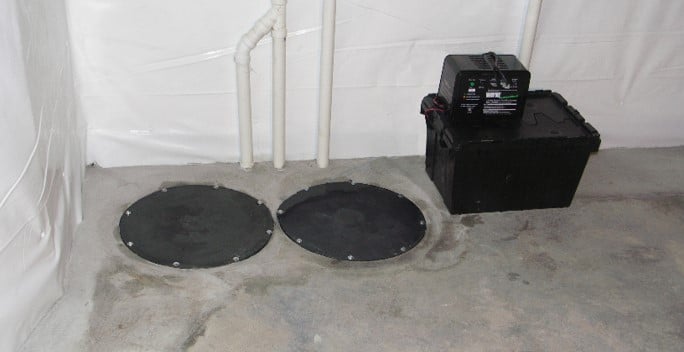
| Interior drainage channel + sump pump | Interior | Basements with seepage where exterior access is limited | Regular pump checks, battery backup tests | Low–Mid |
| Perimeter French drain | Exterior/interior | Redirecting soil water away from foundation | Annual inspection of outlets and slope | Mid |
| Crack chemical injection (epoxy/urethane) | Interior/exterior | Active structural cracks or localized leaks | Monitor for reappearance; occasional re-injection | Low–Mid |
This comparison clarifies that exterior membranes paired with drainage perform best against hydrostatic pressure, while interior drainage and sump pumps can be effective when excavation is impractical. The next section explains decision triggers that should push homeowners toward waterproofing rather than damp proofing.
When Should You Choose Waterproofing Over Damp Proofing?
Choose waterproofing when evidence shows liquid water under pressure or repeated failures after damp-proofing attempts—situations where vapor barriers will not stop damage. Clear indicators include standing water, active seepage through cracks, water pooling at the base of walls after rain, a high local water table, or documented structural wetting. Waterproofing is also warranted when long-term property preservation is a priority, as properly designed drainage and membrane systems reduce recurring remediation costs and protect value. Although initial costs are higher, the total cost of ownership often favors waterproofing in persistently wet sites because it prevents repeated patch repairs and mitigates mold and foundation deterioration. A short checklist in the next section helps map clear signs to the waterproofing decision threshold.
What Are the Key Differences Between Damp Proofing and Waterproofing?
The key differences center on the type of moisture addressed, the level of pressure resistance, materials used, and the expected lifecycle and maintenance burden. Damp proofing targets vapor transmission and capillary rise with coatings and DPCs, offering a less invasive, lower-cost fix for mild problems. Waterproofing employs membranes, drainage systems, and pumps to handle liquid water and hydrostatic forces, requiring more extensive installation and higher upfront costs but delivering robust long-term protection. Other contrasts include maintenance needs—waterproofing systems demand periodic mechanical checks (pumps and drains)—and longevity, where membranes and proper drainage typically outlast surface coatings. Below is a concise comparison table that highlights core attributes to guide a homeowner’s initial assessment.
| Attribute | Damp Proofing | Waterproofing |
|---|---|---|
| Moisture type addressed | Vapor, capillary action | Liquid water, hydrostatic pressure |
| Pressure resistance | Low | High |
| Common materials | DPC, masonry creams, bitumen coatings | Membranes, French drains, sump pumps |
| Typical cost range | Low–Moderate | Moderate–High |
| Expected lifespan | 5–20 years | 15–50 years (system dependent) |
This comparison makes it clear that the right choice aligns with both the moisture mechanism and the long-term performance goals for the building. The following subsections unpack the technical differences in pressure behavior and lifecycle economics.
How Do Moisture Types and Pressure Resistance Vary Between the Two?
Capillary action and vapor diffusion move moisture slowly through porous materials and are effectively reduced by damp proofing techniques that interrupt capillary paths or repel water at the material surface. Damp proofing is therefore well-suited to rising damp and condensation scenarios where no external hydrostatic force pushes water through the wall. By contrast, hydrostatic pressure occurs when groundwater or saturated soil exerts force against foundations; waterproofing systems must resist or redirect that pressured water because coatings alone will be forced through joints and cracks. Understanding these mechanisms—capillary rise versus pressure-driven flow—helps diagnose the root cause: efflorescence and peeling paint suggest capillary action, while active seepage and puddling indicate hydrostatic issues requiring waterproofing.
How Do Costs, Longevity, and Effectiveness Compare?
Waterproofing generally carries higher initial costs than damp proofing but typically achieves longer service life and greater effectiveness in wet conditions, which can lower lifecycle costs by preventing repeated repairs. Damp proofing costs are lower and can be highly effective for vapor issues, but they may fail if misapplied against liquid ingress, leading to recurring expenses. Lifespans vary: masonry creams and coatings may need reapplication every 5–15 years, while well-installed membranes and drainage systems can last 15–50 years with proper maintenance. When evaluating options, consider total cost of ownership: initial installation plus expected maintenance and remediation risk; often, waterproofing is the more economical choice on problematic sites because it limits structural and indoor-air-quality damage over time.
Why Does Choosing the Right Moisture Control Method Matter for Basement Health?
 Selecting the correct moisture-control method protects structural integrity, indoor-air quality, and property value by addressing the actual cause of wetness rather than its symptoms. A mismatched solution—such as using damp proofing where hydrostatic pressure exists—can trap water, accelerate deterioration, and increase mold risk. Proper identification and targeted intervention maintain foundation strength, prevent finish damage, and reduce long-term repair and remediation expenses. The next subsections enumerate the concrete risks of incorrect choices and describe how a professional assessment minimizes those risks by mapping diagnostics to appropriate interventions.
What Are the Risks of Incorrect Moisture Control Choices?
Misdiagnosis or under-treatment of basement moisture can lead to escalating structural and health consequences: recurring leaks, accelerated concrete spalling, damaged finishes, and persistent mold that degrades indoor air quality. For example, applying surface coatings to a pressurized wall can conceal symptoms while water continues to move behind the coating, fostering hidden rot and corrosion. Quantifiable outcomes include repeated remediation costs and potential devaluation of the property, as buyers often factor water history into offers. Visible indicators that a prior treatment failed include reappearing efflorescence, new peeling paint, or return of musty odors; recognizing these signs early prevents deeper degradation and costlier repairs later.
How Can Professional Assessment Ensure the Best Solution?
A professional assessment uses systematic diagnostics—moisture meter mapping, dye and water tests, excavation inspection when needed, and hydrostatic evaluation—to identify the moisture mechanism and map it to an appropriate solution. Technicians measure wall moisture gradients, inspect soil drainage and grading, and evaluate the presence of a high water table to decide between damp proofing and waterproofing. This diagnostic mapping reduces the risk of incorrect treatment by providing objective data rather than relying on visual guesswork. When professionals tie assessment results to targeted interventions, homeowners receive solutions tailored to the site’s soil, foundation type, and symptom profile, improving effectiveness and reducing lifecycle costs.
How Do You Decide Between Basement Waterproofing and Damp Proofing for Your Home?
Deciding between damp proofing and waterproofing requires evaluating the severity of moisture, evidence of liquid water, property context, and long-term objectives. A stepwise checklist helps translate observations into a decision: first identify symptoms, then test for active seepage or hydrostatic signs, assess drainage and grading, consider structural risk and intended basement use, and finally consult diagnostics before investing. This structured approach balances upfront cost with long-term risk and aligns treatments—whether DPCs and hydrophobic creams or membranes and drainage systems—to the actual cause. The next subsections provide a prioritized factors list and quantify the long-term benefits of correct moisture management.
What Factors Should Influence Your Moisture Control Choice?
Homeowners should prioritize symptom type, site hydrology, soil drainage, foundation design, and intended basement use when selecting a moisture-control method. Symptom-specific factors include distinguishing condensation, efflorescence, and rising damp from active leaks and pooling; site factors include water table level and surface grading that influence hydrostatic risk. Budget and access (whether exterior excavation is feasible) also influence the practical choice between interior drainage systems and exterior membranes. Use this checklist to guide preliminary decisions:
- Inspect for standing water or pooling after heavy rain.
- Check for efflorescence patterns and peeling paint indicating capillary action.
- Evaluate surface grading and downspout discharge relative to the foundation.
- Determine whether exterior excavation is feasible or interior systems are preferable.
What Are the Long-Term Benefits of Proper Basement Moisture Management?
Proper moisture management reduces remediation costs, preserves structural components, and improves indoor-air quality by preventing mold and mildew growth over the long term. Homes with controlled basements experience fewer finish repairs, lower energy costs from stabilized humidity, and better resale value due to documented protection against water damage. Effective systems also minimize disruption by avoiding repeated patch repairs and enable predictable maintenance cycles (pump checks, membrane inspections). Investing in the right solution upfront—based on diagnostics and aligned with site conditions—delivers measurable returns in reduced repair frequency, prolonged material lifespans, and healthier indoor environments.
What Are the Latest Trends and Innovations in Basement Moisture Control?
Recent trends emphasize sustainability, smarter monitoring, and materials science advances that improve performance while reducing environmental impact. As of 2025, low-VOC water-based and more durable membrane chemistries are becoming common, and smart sensors for moisture and pump status offer predictive maintenance capabilities that catch issues before visible damage occurs. Innovations also include self-healing membranes and improved injection resins that bond to damp concrete, expanding options for minimally invasive repairs. These trends shift the market toward solutions that combine long-term durability, lower environmental footprint, and data-driven maintenance; the next subsections explore sustainable materials and market drivers in greater detail.
How Are Sustainable and Smart Materials Changing Waterproofing and Damp Proofing?
Sustainable materials—such as low-VOC coatings and water-based membranes—reduce environmental and indoor-air impacts while meeting performance needs, though some tradeoffs in extreme-pressure scenarios remain. Smart sensors embedded in drainage channels and connected to sump pumps enable continuous moisture monitoring and alert homeowners to pump failures or rising water tables, enabling proactive maintenance. Advances in polymer chemistry produce membranes with improved elongation and puncture resistance, increasing lifespan and reducing lifecycle costs. These technologies integrate into decision frameworks by offering options that combine environmental benefits with mechanical reliability when chosen for the appropriate application and site conditions.
What Are the Growing Market Drivers for Basement Waterproofing Services?
Market growth is driven by aging housing stock, increased frequency of extreme weather events, and greater homeowner awareness of water damage risks; these forces together are expanding demand for robust moisture-control solutions. Recent market analyses (2025) indicate significant growth in service demand as urbanization and climate variability increase hydrostatic risks in many regions. Regulations and construction standards updating building-envelope requirements also push retrofits and new installations. These drivers mean homeowners should weigh long-term resilience and standards compliance when selecting moisture-control systems, as modern solutions increasingly emphasize durability, sustainability, and monitoring to address evolving environmental pressures.
- Increased extreme weather: More heavy rainfall events raise groundwater pressure risks.
- Aging foundations: Older homes often lack modern waterproofing or adequate drainage.
- Regulatory updates: Stricter building envelope and moisture-control guidance increase retrofit demand.
These factors underscore why a data-driven, site-specific approach matters now more than ever when planning basement moisture control.
Experimental Analysis of Moisture Protection in Buildings
It is known that capillary moisture enters the wall layers through the foundation and plinth walls of buildings in operation and affects their technical condition. The appearance of capillary moisture and its penetration into the layers of walls – the quality of construction work during the construction of buildings, service life (time since construction), air temperature and humidity, ground conditions of the construction site, increase in ground soil moisture, dynamic forces and earthquake effects, caused by the aggressive effects of the environment and others. The main goal of assessing the technical condition of buildings is to establish a comfortable and optimal regime during their use. The problem of rational technical operation of buildings is mainly aimed at keeping them in a satisfactory technical condition with low operating costs. This article presents an analysis of experiments conducted to protect buildings from underground moisture.
Experimental analysis of moisture protection of buildings, E Tulakov, 2024

A.M. Shield Waterproofing recently awarded the Basement Health Association STAR Award for exceptional customer care for the fifth year in a row. Servicing Long Island, NYC and Westchester with Nationally Certified Waterproofing and Mold Remediation Specialists they are able to provide the highest level of professional solutions. A.M. Shield has the widest range of services available to property owners in the greater New York area utilizing multiple techniques in exterior foundation waterproofing, interior drainage, foundation crack injections and foundation repair solutions,. A.M. Shield™s environmental division will assess the damage, repair the problem and create a healthy environment for property owners who experience mold or moisture problems.
