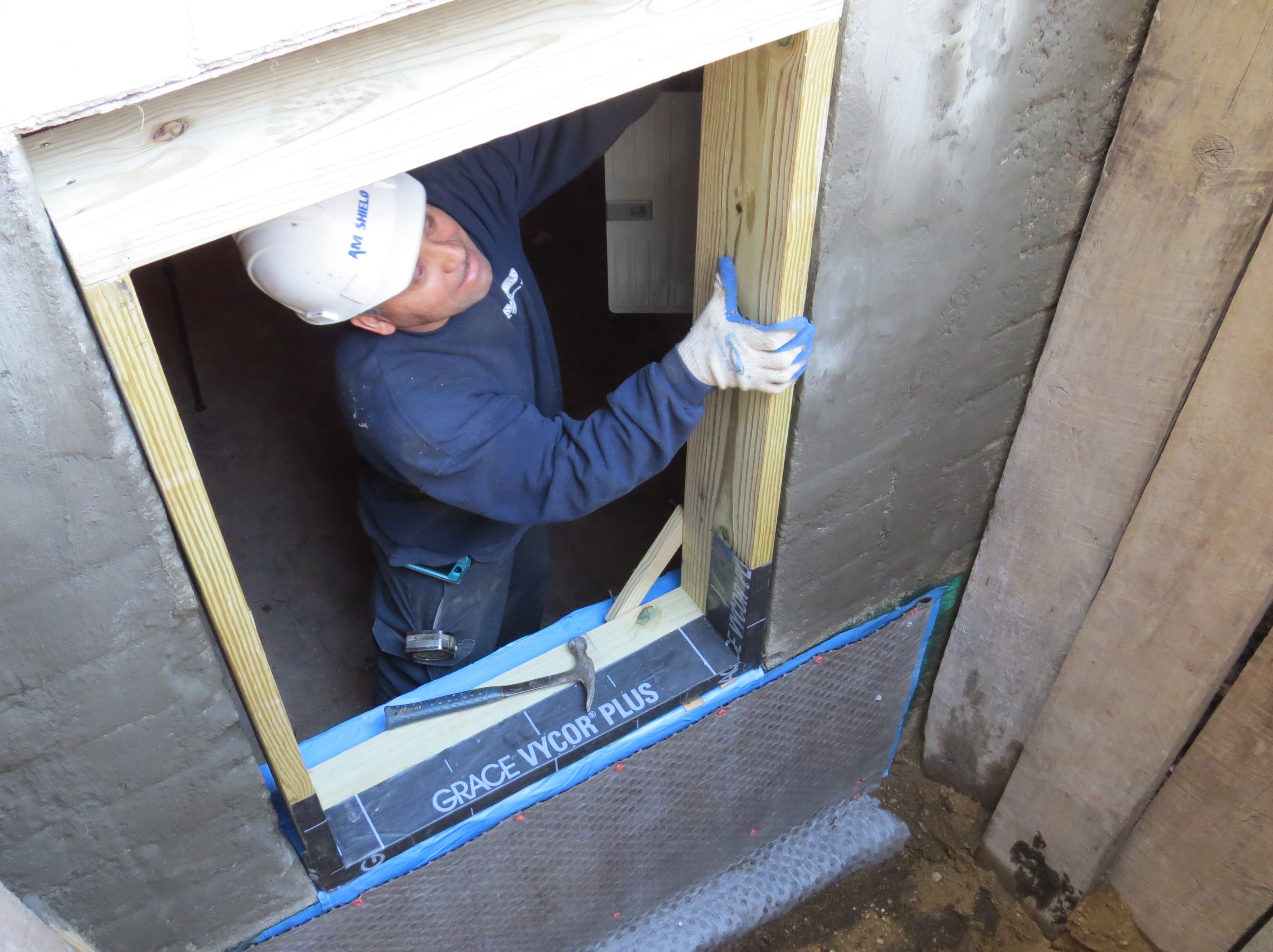
1. Select the egress window location based on the layout of your basement. Consult with your local building department for setback requirements and permits.
2. Before excavating your foundation, contact your local utility mark out service to determine underground utilities.
3. Excavate the foundation in the area of the egress window, utilizing a shoring system or a form of OSHA compliant trench protection. The excavation should extend down to the lowest portion of the foundations footing.
4. Brace the interior floor joists with a temporary stud wall to transfer the load from the foundation wall. This temporary stud wall can be used for containment purposes by hanging a plastic sheet and securing it onto the foundation.
5. Layout your window opening on the inside of the foundation. Determine your window size based on your local town or city codes.
6. Drill a pilot hole from the inside to the outside and transfer the measurements to the exterior side of the foundation. Use a drill bit that is long enough to go through the wall. Make sure the drill is level when it penetrates the wall.
7. Cut the foundation wall with a concrete saw equipped with a diamond blade. Scoring the concrete with a ¼ inch cut is recommended for better control of the saw. A water cooled 12” concrete ring saw or diamond blade chain saw is best suited for a clean cut. A chipping or demolition hammer is not recommended because of the vibration and possible foundation cracks. Wear a dust mask, hearing and eye protection when operating the saw.
8. Waterproof the foundation below the window (drainage area). The waterproof membrane should start at the window sill area and extend down to the bottom of the footing.
9. Back fill the waterproofed foundation with clean drainage stone. If a footing drain exists, extent a pipe from the footing drain up into the drainage stone for proper drainage. In areas of poor drainable soils, a sump pump is recommended. The location of the pump must be below the window and should be placed into a basin in a location suitable for service.
10. Install a steel header above the window to support the load of the floor joists. Consult with an engineer or architect for proper header size and weight.
11. Construct a pressure treated wood frame to support the window. Secure the wood frame to the foundation with a concrete anchoring drive rivet or screw. Apply mortar between the wood frame and the foundation.
12. Install the window into the rough frame using galvanized or stainless steel screws and wood shims to level and plumb the window.
13. Caulk and cap the window with aluminum trim flashing.
14. Secure the area well to the foundation with concrete anchors and waterproof the seam between the foundation wall and the well.
15. Back fill the well with drainage stone to prevent water pressure from building up on the sides of the well.
wall, concrete, drainage, basement, water, waterproofing, window, emergency exit, building code, daylight, bedroom, lumber, floor, retaining wall, emergency, joist, minnesota, construction, window installation, free estimate, egress, egress window installation, installing egress windows, basement window installation, basement window replacement cost, basement window installation near me, window well installation near me, basement egress door contractors near me, basement window installers near me, basement window replacements, basement window installation cost, window well installation, foundation, steel, landscape, flood, gravel, soil, fiberglass, concrete saw, masonry, wisconsin, room, foot, home improvement, wood, caulk, egress window, basement window, basement egress windows, cover, basement egress window, skip to content, estimate, installation, basement egress, company, egress windows, building codes, diy, security, escape window, basement window well installation, window well cover installation near me, sealant, sunlight, tile, installing an egress window, water damage, space, concrete block, framing, install, drain, basement window replacement contractors, renovation, french drain, glass, drywall, ladder, window well cover installation, egress window well installation, plumbing, leak, sump pump, basement waterproofing, pump, sump, roof, attic, drill, replacement windows, window sill, pest, fastener, ventilation, pdf, dehumidifier, accessibility, building, plywood, moisture, dimension, pipe, rain, egress window drainage
Frequently Asked Questions
Can egress window wells be installed in existing homes?
Egress window wells can indeed be installed in existing homes. This process enhances safety by providing an emergency exit from basements while ensuring compliance with local building codes.
What are the building codes for egress windows in my area?
The building codes for egress windows in your area dictate specific requirements regarding size, placement, and accessibility to ensure safety. It's essential to consult your local building authority for the most accurate and up-to-date regulations.
How do I determine if I need an egress window in my basement?
Determining if you need an egress window in your basement involves checking local building codes, ensuring your basement has adequate ventilation and natural light, and confirming that it meets safety requirements for emergency exits.
How much does it cost to install an egress window?
The cost to install an egress window typically ranges from $1,500 to $5,000, depending on factors such as location, window size, and installation complexity. It's essential to consult local building codes and obtain quotes from professionals for accurate pricing.
How long does it take to install an egress window on average?
The average time to install an egress window typically ranges from 4 to 8 hours, depending on factors like site conditions and the complexity of the installation.
Do egress windows increase the value of my home?
Egress windows can increase the value of your home by enhancing safety, improving natural light, and providing additional living space. These features make your property more appealing to potential buyers, especially in markets where basement living areas are desirable.
What are the benefits of egress window well installation?
The benefits of egress window well installation include enhanced safety by providing a secondary exit in emergencies, improved natural light and ventilation in basements, and compliance with local building codes, which can increase property value and livability.
What is the purpose of installing an egress window in a basement?
The purpose of installing an egress window in a basement is to provide a safe and accessible exit in case of an emergency, ensuring compliance with building codes and enhancing natural light and ventilation in the space.
Can I install an egress window myself or do I need a professional?
Installing an egress window yourself is possible, but it requires careful planning and knowledge of local building codes. Hiring a professional ensures proper installation and compliance, enhancing safety and effectiveness in waterproofing your basement.
Do I need a permit to install an egress window in my home?
Installing an egress window in your home typically requires a permit. It’s essential to check with your local building authority to ensure compliance with safety regulations and codes before proceeding with the installation.
Can egress windows be installed in any type of foundation?
Egress windows can be installed in various types of foundations, including concrete, block, and wood. However, specific considerations regarding structural integrity and local building codes must be addressed to ensure proper installation and safety.
What are the local building codes for egress window installation?
Local building codes for egress window installation typically require specific dimensions for the window opening, minimum height and width standards, and proper placement to ensure safety and accessibility. Always consult your local regulations before proceeding.
What materials are used for egress window well construction?
The materials used for egress window well construction typically include galvanized steel, plastic, or concrete. These materials ensure durability and compliance with safety standards, providing effective drainage and preventing water accumulation around the window.
What types of egress windows are available in the market?
The types of egress windows available in the market include casement, sliding, double-hung, and awning windows, each designed to provide safe exit routes while meeting local building codes and enhancing basement ventilation.
What tools are needed for egress window installation?
The tools needed for egress window installation include a concrete saw, measuring tape, level, shovel, hammer, and safety gear. These tools ensure accurate measurements and safe cutting of the window opening.
How to choose the right egress window location?
Choosing the right egress window location involves assessing factors such as natural light, accessibility, and compliance with local building codes. Ensure the window is positioned to provide a clear escape route while maximizing safety and functionality.
What is the installation process for egress windows?
The installation process for egress windows involves selecting the appropriate location, excavating the area, cutting the opening in the wall, installing the window frame, and ensuring proper waterproofing and compliance with local building codes.
Are there egress window options for small basements?
Egress window options for small basements do exist. Homeowners can choose from various designs, including smaller casement or sliding windows, which comply with safety regulations while maximizing natural light and ventilation.
What are common egress window installation mistakes?
Common egress window installation mistakes include improper sizing of the window, neglecting local building codes, inadequate waterproofing measures, and failing to ensure proper drainage. These errors can compromise safety and lead to costly repairs.
How to maintain egress windows for safety?
Maintaining egress windows for safety involves regular inspections for obstructions, ensuring proper sealing and functionality, and cleaning the window wells. Check for debris and ensure clear access in case of emergencies to uphold safety standards.
What is the difference between window wells and egress windows?
The difference between window wells and egress windows is that egress windows are openings that allow for emergency exits from a basement, while window wells are the structures that surround these windows, providing drainage and preventing soil from collapsing into the opening.
Do egress windows require special framing or support?
Egress windows require special framing and support to ensure structural integrity and compliance with building codes. Proper installation includes reinforcing the surrounding wall to accommodate the window's size and weight, enhancing safety and functionality.
How can egress windows improve basement ventilation?
Egress windows can significantly improve basement ventilation by allowing fresh air to circulate, reducing humidity and odors. This helps create a healthier environment and prevents mold growth, making your basement more comfortable and safe.
What size egress window do I need?
The size of the egress window you need depends on local building codes, but generally, it should have a minimum opening of 5.7 square feet, with dimensions of at least 24 inches high and 20 inches wide to ensure safe exit in emergencies.
What is the best time of year for installation?
The best time of year for installation is typically during the spring and fall. These seasons offer moderate temperatures and less rainfall, making it ideal for egress window installations and ensuring optimal conditions for waterproofing.
Can egress window wells be landscaped?
Egress window wells can indeed be landscaped. However, it's essential to ensure that the landscaping does not obstruct the window well's functionality or drainage, maintaining safety and compliance with local building codes.
Are there energy-efficient egress window options?
Energy-efficient egress window options are available, featuring advanced insulation, low-E glass, and energy-efficient frames that help reduce heat loss and improve overall energy performance in your home.
What are the risks of improper egress window installation?
The risks of improper egress window installation include compromised safety during emergencies, potential violations of local building codes, and increased water intrusion, which can lead to structural damage and mold growth in your basement.
How to ensure accessibility with egress windows?
Ensuring accessibility with egress windows involves selecting appropriately sized windows that meet local building codes, providing clear pathways for exit, and considering any necessary modifications, such as ramps, to accommodate all individuals safely.
What educational resources are available for egress window installation?
Educational resources for egress window installation include online tutorials, instructional videos, and detailed guides from reputable sources. Additionally, consulting local building codes and professional waterproofing services can provide valuable insights and ensure compliance.
wall, concrete, drainage, basement, water, waterproofing, window, emergency exit, building code, daylight, bedroom, lumber, floor, retaining wall, emergency, joist, minnesota, construction, window installation, free estimate, egress, egress window installation, installing egress windows, basement window installation, basement window replacement cost, basement window installation near me, window well installation near me, basement egress door contractors near me, basement window installers near me, basement window replacements, basement window installation cost, window well installation, foundation, steel, landscape, flood, gravel, soil, fiberglass, concrete saw, masonry, wisconsin, room, foot, home improvement, wood, caulk, egress window, basement window, basement egress windows, cover, basement egress window, skip to content, estimate, installation, basement egress, company, egress windows, building codes, diy, security, escape window, basement window well installation, window well cover installation near me, sealant, sunlight, tile, installing an egress window, water damage, space, concrete block, framing, install, drain, basement window replacement contractors, renovation, french drain, glass, drywall, ladder, window well cover installation, egress window well installation, plumbing, leak, sump pump, basement waterproofing, pump, sump, roof, attic, drill, replacement windows, window sill, pest, fastener, ventilation, pdf, dehumidifier, accessibility, building, plywood, moisture, dimension, pipe, rain, egress window drainage
Frequently Asked Questions
Can egress window wells be installed in existing homes?
Egress window wells can indeed be installed in existing homes. This process enhances safety by providing an emergency exit from basements while ensuring compliance with local building codes.
What are the building codes for egress windows in my area?
The building codes for egress windows in your area dictate specific requirements regarding size, placement, and accessibility to ensure safety. It's essential to consult your local building authority for the most accurate and up-to-date regulations.
How do I determine if I need an egress window in my basement?
Determining if you need an egress window in your basement involves checking local building codes, ensuring your basement has adequate ventilation and natural light, and confirming that it meets safety requirements for emergency exits.
How much does it cost to install an egress window?
The cost to install an egress window typically ranges from ,500 to ,000, depending on factors such as location, window size, and installation complexity. It's essential to consult local building codes and obtain quotes from professionals for accurate pricing.
How long does it take to install an egress window on average?
The average time to install an egress window typically ranges from 4 to 8 hours, depending on factors like site conditions and the complexity of the installation.
Do egress windows increase the value of my home?
Egress windows can increase the value of your home by enhancing safety, improving natural light, and providing additional living space. These features make your property more appealing to potential buyers, especially in markets where basement living areas are desirable.
What are the benefits of egress window well installation?
The benefits of egress window well installation include enhanced safety by providing a secondary exit in emergencies, improved natural light and ventilation in basements, and compliance with local building codes, which can increase property value and livability.
What is the purpose of installing an egress window in a basement?
The purpose of installing an egress window in a basement is to provide a safe and accessible exit in case of an emergency, ensuring compliance with building codes and enhancing natural light and ventilation in the space.
Can I install an egress window myself or do I need a professional?
Installing an egress window yourself is possible, but it requires careful planning and knowledge of local building codes. Hiring a professional ensures proper installation and compliance, enhancing safety and effectiveness in waterproofing your basement.
Do I need a permit to install an egress window in my home?
Installing an egress window in your home typically requires a permit. It’s essential to check with your local building authority to ensure compliance with safety regulations and codes before proceeding with the installation.
Can egress windows be installed in any type of foundation?
Egress windows can be installed in various types of foundations, including concrete, block, and wood. However, specific considerations regarding structural integrity and local building codes must be addressed to ensure proper installation and safety.
What are the local building codes for egress window installation?
Local building codes for egress window installation typically require specific dimensions for the window opening, minimum height and width standards, and proper placement to ensure safety and accessibility. Always consult your local regulations before proceeding.
What materials are used for egress window well construction?
The materials used for egress window well construction typically include galvanized steel, plastic, or concrete. These materials ensure durability and compliance with safety standards, providing effective drainage and preventing water accumulation around the window.
What types of egress windows are available in the market?
The types of egress windows available in the market include casement, sliding, double-hung, and awning windows, each designed to provide safe exit routes while meeting local building codes and enhancing basement ventilation.
What tools are needed for egress window installation?
The tools needed for egress window installation include a concrete saw, measuring tape, level, shovel, hammer, and safety gear. These tools ensure accurate measurements and safe cutting of the window opening.
How to choose the right egress window location?
Choosing the right egress window location involves assessing factors such as natural light, accessibility, and compliance with local building codes. Ensure the window is positioned to provide a clear escape route while maximizing safety and functionality.
What is the installation process for egress windows?
The installation process for egress windows involves selecting the appropriate location, excavating the area, cutting the opening in the wall, installing the window frame, and ensuring proper waterproofing and compliance with local building codes.
Are there egress window options for small basements?
Egress window options for small basements do exist. Homeowners can choose from various designs, including smaller casement or sliding windows, which comply with safety regulations while maximizing natural light and ventilation.
What are common egress window installation mistakes?
Common egress window installation mistakes include improper sizing of the window, neglecting local building codes, inadequate waterproofing measures, and failing to ensure proper drainage. These errors can compromise safety and lead to costly repairs.
How to maintain egress windows for safety?
Maintaining egress windows for safety involves regular inspections for obstructions, ensuring proper sealing and functionality, and cleaning the window wells. Check for debris and ensure clear access in case of emergencies to uphold safety standards.
What is the difference between window wells and egress windows?
The difference between window wells and egress windows is that egress windows are openings that allow for emergency exits from a basement, while window wells are the structures that surround these windows, providing drainage and preventing soil from collapsing into the opening.
Do egress windows require special framing or support?
Egress windows require special framing and support to ensure structural integrity and compliance with building codes. Proper installation includes reinforcing the surrounding wall to accommodate the window's size and weight, enhancing safety and functionality.
How can egress windows improve basement ventilation?
Egress windows can significantly improve basement ventilation by allowing fresh air to circulate, reducing humidity and odors. This helps create a healthier environment and prevents mold growth, making your basement more comfortable and safe.
What size egress window do I need?
The size of the egress window you need depends on local building codes, but generally, it should have a minimum opening of 5.7 square feet, with dimensions of at least 24 inches high and 20 inches wide to ensure safe exit in emergencies.
What is the best time of year for installation?
The best time of year for installation is typically during the spring and fall. These seasons offer moderate temperatures and less rainfall, making it ideal for egress window installations and ensuring optimal conditions for waterproofing.
Can egress window wells be landscaped?
Egress window wells can indeed be landscaped. However, it's essential to ensure that the landscaping does not obstruct the window well's functionality or drainage, maintaining safety and compliance with local building codes.
Are there energy-efficient egress window options?
Energy-efficient egress window options are available, featuring advanced insulation, low-E glass, and energy-efficient frames that help reduce heat loss and improve overall energy performance in your home.
What are the risks of improper egress window installation?
The risks of improper egress window installation include compromised safety during emergencies, potential violations of local building codes, and increased water intrusion, which can lead to structural damage and mold growth in your basement.
How to ensure accessibility with egress windows?
Ensuring accessibility with egress windows involves selecting appropriately sized windows that meet local building codes, providing clear pathways for exit, and considering any necessary modifications, such as ramps, to accommodate all individuals safely.
What educational resources are available for egress window installation?
Educational resources for egress window installation include online tutorials, instructional videos, and detailed guides from reputable sources. Additionally, consulting local building codes and professional waterproofing services can provide valuable insights and ensure compliance.