
Heavy, sustained rainfall on Long Island creates a persistent risk of basement flooding, foundation moisture, and landscape erosion that many homeowners underestimate. This article explains exterior drainage systems how they work, why Long Island’s climate and soils make them essential, and which solutions best prevent water damage. You will learn to recognize local challenges, compare French drains, dry wells, catch basins, channel drains, downspout extensions, and sump pumps, and understand professional installation and maintenance expectations. The guide maps a clear installation workflow, cost and ROI considerations, and seasonal upkeep tailored to Nassau and Suffolk microclimates. Practical lists, comparison tables, and troubleshooting checklists make it straightforward to plan a drainage solution that reduces hydrostatic pressure, diverts stormwater away from foundations, and preserves landscape value.
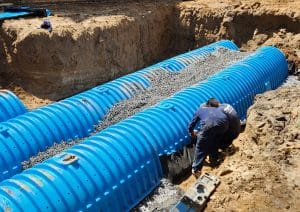 What Are the Key Challenges of Heavy Rains in Long Island?

Exterior drainage systems address specific local challenges that combine coastal weather patterns, variable soils, and neighborhood drainage constraints. Heavy rains produce concentrated runoff that overwhelms surface grading and increases hydrostatic pressure against foundations, so collection and conveyance systems are necessary to redirect water safely off-site or into controlled infiltration. The primary homeowner benefit is reduced interior water intrusion and slower progression of foundation damage when runoff is managed proactively. Understanding these challenges helps prioritize which drainage types will work best and where to focus inspection and maintenance efforts going forward.
How Long Island’s mix of coastal storms and localized runoff patterns creates unique drainage needs leads directly into the climatic and geographic details homeowners should consider.
How Does Long Island’s Climate Impact Home Drainage Needs?
Long Island’s climate produces episodic heavy precipitation and coastal storm surges that increase runoff intensity and timing variability, which directly affects drainage capacity requirements. Stormwater runoff solutions must account for short-duration high-intensity events as well as seasonal snowmelt that can saturate shallow soils and raise groundwater levels, reducing infiltration. Designers therefore size conduits and infiltration features to handle peak flows while considering soil permeability and seasonal saturation windows to prevent system overwhelm. This seasonal and storm-driven variability makes robust exterior drainage systems a more reliable defense than ad-hoc surface fixes.
These climatic impacts also increase the likelihood of specific water damage types that homeowners should anticipate and plan for.
What Are the Common Water Damage Risks from Heavy Rains?
Heavy rains repeatedly expose homes to basement flooding, increased hydrostatic pressure against foundation walls, soil erosion around footings, and elevated indoor humidity that promotes mold growth when water finds entry points. Flooded basements often trigger secondary damage—finished interior losses, mechanical system impairment, and potential structural weakening—that drives repair costs and can complicate insurance claims. Early investment in exterior drainage systems reduces frequency of these incidents by intercepting water before it reaches the foundation line, thereby preserving structural integrity and indoor air quality over time.
Recognizing these risks points to why soil and site geography must be understood before selecting a drainage approach.
Why Is Understanding Soil and Geography Important for Drainage?
Soil type and site slope determine whether runoff will infiltrate on-site or continue as surface flow, which in turn dictates whether systems should emphasize conveyance, infiltration, or a hybrid approach. Clay soils limit infiltration and increase surface runoff, while sandy soils encourage infiltration but may require protection for subsurface components; high groundwater areas reduce dry well effectiveness and shift preference toward conveyance or sump-driven systems. A site-specific assessment that measures slope, maps flow paths, and identifies groundwater behavior is essential to choose systems that reliably reduce foundation water risk without creating downstream problems.
Assessing soil and geography naturally leads into the array of exterior drainage systems available and how each matches local conditions.
What Types of Exterior Drainage Systems Protect Long Island Homes?
Exterior drainage systems are specialized solutions that divert, collect, or infiltrate stormwater to reduce pressure on foundations and control yard saturation. Each system type functions differently—some prioritize collection and conveyance, others enable on-site infiltration, and some combine surface and subsurface strategies to manage water effectively. Choosing the right system depends on the problem symptom, soil permeability, property slope, and access constraints, with the goal of reducing foundation risk while preserving landscape function. Below is a concise list of common system types and their primary purposes to help homeowners identify likely fits for Long Island properties.
Exterior drainage systems fall into several practical categories:
- French drains: Subsurface collection pipes that relieve hydrostatic pressure and direct water away from foundations.
- Dry wells: Infiltration chambers that accept runoff and recharge groundwater when soils permit.
- Catch basins and channel drains: Surface collection units that capture water on patios, driveways, and low spots and channel it to pipes.
- Downspout extensions and grading: Surface solutions that move roof runoff away from foundations and restore positive slope.
- Sump pump systems: Active removal for basements where passive drainage cannot prevent water entry.
These system types can be compared to show attributes, cost ranges, and best-use scenarios in Long Island contexts.
Intro to comparative table: The table below compares common drainage types by typical use-case, installation complexity, lifespan, maintenance needs, ideal soil/slope, and a general cost range for Long Island conditions.
| System Type | Typical Use-Case | Value (Installation Complexity / Lifespan / Maintenance) |
|---|---|---|
| French drain | Relieve subsurface water near foundations | Moderate complexity; 20+ year lifespan; periodic inspection for siltation |
| Dry well | Manage large-volume roof/yard runoff where infiltration possible | Moderate complexity; 15–30 year lifespan; monitoring for groundwater impact |
| Catch basin / channel drain | Surface water collection on paved areas and low spots | Lower complexity; 10–25 year lifespan; frequent debris clearing |
| Downspout extension / grading | Direct roof runoff away from foundation | Low cost; long lifespan if maintained; annual grading checks |
| Sump pump | Active basement water removal where interior water arrives | Moderate complexity; equipment life 5–15 years; battery backup recommended |
How Do French Drains Work and What Are Their Benefits?
A French drain is a trench filled with gravel and a perforated pipe that collects subsurface water and conveys it away from vulnerable areas, reducing hydrostatic pressure against foundations. The mechanism—perforated pipe, aggregate envelope, and geotextile fabric—creates a reliable subsurface flow path that intercepts groundwater before it reaches the foundation wall, which protects concrete and masonry from prolonged moisture exposure. Benefits include reduced basement dampness, slower soil saturation near footings, and lower long-term foundation repair needs when installed correctly. Regular inspection for silt buildup and proper outlet function preserves performance over time.
The fundamental principle of a French drain is to intercept and redirect subsurface water, a concept that has been applied in various engineering contexts.
French Drain Design for Groundwater Diversion
Design and construction of a French drain for groundwater diversion in solid waste storage area six at the Oak Ridge National Laboratory, 1984
What Are Dry Wells and How Do They Manage Stormwater?
Dry wells are subsurface chambers or pits that receive stormwater runoff and allow it to infiltrate into surrounding soils, effectively acting as temporary storage that reduces peak runoff rates. Their performance depends on soil permeability and groundwater depth, so they work best where soils permit infiltration and the water table is sufficiently deep to accept recharge without causing nuisances. Proper sizing and siting are critical to avoid groundwater contamination and ensure regulatory compliance; permitting is sometimes required for large systems. Dry wells offer a sustainable approach for managing roof runoff and minor yard flows when conditions are suitable.
How Do Catch Basins and Channel Drains Control Surface Water?
Catch basins and channel drains collect surface flows where water pools—along driveways, patios, and low-lying transitions—and route it into underground piping or storm systems to prevent localized flooding. A catch basin typically sits at a low point, capturing runoff and sediment that can be cleaned out periodically, while channel drains span a linear edge to intercept sheet flow before it ponds. Installation involves grading, trenching to connect to downstream outlets, and selecting grate types for load rating and aesthetics. Routine debris removal and occasional sediment clearing maintain effectiveness and prevent blockages that would otherwise return water to the surface.
Why Are Downspout Extensions and Grading Essential for Water Management?
Downspout extensions and corrected grading are low-cost, high-impact measures that ensure roof runoff leaves the building envelope and travels away from foundations rather than pooling at the base of walls. A minimum recommended approach is to provide several feet of positive slope away from the foundation and extend downspouts to clear immediate perimeter soil; this reduces the volume entering subsurface drains and lowers hydrostatic pressure. Homeowner-focused corrections like adding soil to create a consistent grade or using splash blocks and extensions are often the first line of defense. Where these measures are insufficient, combining them with subsurface solutions yields the most resilient protection.
How Do Sump Pumps Prevent Basement Flooding?
Sump pumps are active devices installed in a basin to collect and eject groundwater or infiltrating water away from the foundation via a discharge pipe, providing a secondary line of defense when exterior systems cannot fully prevent water arrival. Two common types are submersible and pedestal pumps; both remove standing water but differ in installation footprint and noise profile. Important features include properly sized pumps, reliable discharge points, alarms, and battery or generator backup to ensure operation during power outages associated with storms. Regular testing, float-clearance checks, and scheduled maintenance keep sump pumps ready for events that exceed passive drainage capacity.
Sump pumps integrate with French drains and interior waterproofing to provide layered protection strategies.
How Does Professional Drainage Installation Protect Your Home?
Professional drainage installation combines technical assessment, correct component selection, and quality execution to reduce the risk that fixes will fail under heavy Long Island storms. Trained installers apply site-specific knowledge—soil behavior, slope, groundwater tendencies—and code familiarity to design systems that relieve hydrostatic pressure and prevent repeated water intrusion. The mechanism of value is consistent: a professionally designed conveyance or infiltration path decreases the volume and pressure against foundations, lowering the probability of structural damage and interior flooding. Homeowners benefit from reliable performance, documented inspection and installation records, and clearer pathways for warranty or corrective action when issues arise.
A detailed look at how drainage systems affect foundations shows why professional oversight matters for long-term protection.
How Does Exterior Drainage Prevent Foundation Water Damage?
Exterior drainage prevents foundation water damage by intercepting and redirecting groundwater and surface runoff before it exerts prolonged hydrostatic pressure on foundation walls and slabs. This reduced pressure lessens the driving force for cracks and seepage, slowing moisture-driven deterioration and lowering the incidence of interior dampness and mold. Where combined with positive grading and maintained downspouts, exterior systems form a first defense layer that reduces dependence on interior waterproofing. This direct connection between exterior conveyance and foundation preservation is a primary reason to prioritize subsurface drains where site conditions warrant.
What Role Does Drainage Play in Basement Waterproofing?
Exterior drainage reduces the volume of water attempting to enter a structure, allowing interior waterproofing measures and sump pumps to manage residual flows more effectively and at lower capacity. An exterior-first strategy minimizes the frequency of interior backups and reduces long-term maintenance burdens, while interior systems provide active removal when water breaches the exterior defenses. Coordinating exterior drains, foundation coatings, and interior pumps yields redundancy that lowers flood risk during extreme events. Proper integration also enables more efficient pump sizing and prolongs service life of mechanical components by reducing the load they must handle.
How Can Drainage Systems Preserve Your Landscape and Property Value?
Well-designed drainage prevents erosion, protects planting beds, and stabilizes lawn areas by controlling where water infiltrates and where it is conveyed, which preserves curb appeal and prevents costly landscape restorations after flooding. Effective stormwater management reduces sediment movement, protects root zones of ornamental plantings, and helps maintain usable outdoor living spaces after storms. These landscape protections contribute to perceived and real property value by preventing recurring damage and demonstrating a maintained, functional yard. Conserving landscape assets through drainage investment often yields long-term savings compared with repeated replanting and soil replacement.
Why Is Hiring Local Long Island Experts Important for Installation?
Local Long Island experts bring site-specific knowledge—familiarity with regional soils, high water table pockets, coastal storm behavior, and county permitting nuances—that improves system selection and reduces installation risks. Homeowners should expect installers to hold appropriate licenses, carry insurance, provide references from nearby projects, and outline a typical timeline, scope of work, and warranty terms; this transparency helps align expectations and simplifies follow-up. Installers often handle permit submissions and coordinate inspections with Nassau or Suffolk county authorities when required, reducing homeowner administrative burden. Local expertise therefore increases the probability that systems will perform as designed under Long Island’s unique conditions.
What Is the Step-by-Step Process for Installing Exterior Drainage Systems?
A structured installation process clarifies responsibilities, timeline, and expected outcomes so homeowners can plan disruption and restoration. The core steps are site assessment, design selection, excavation and installation, surface restoration, and commissioning, with testing and documentation at handover. Each phase addresses different risks: assessment identifies soil and flow constraints, design matches system function to those constraints, installation executes durable components, and commissioning verifies performance under test conditions. Clear communication and an itemized schedule reduce surprises and ensure the installed system aligns with homeowner goals for protection and landscape preservation.
Below is a numbered summary of typical installation steps that homeowners can expect.
- Site assessment and diagnostic mapping to identify flow paths and soil conditions.
- Design and permitting phase where system type and outlet strategy are chosen.
- Excavation and installation of pipes, aggregate envelope, and structural components.
- Backfill, surface restoration, and connection to discharge or infiltration features.
- Commissioning, functional testing, and delivery of maintenance recommendations.
This sequence frames what homeowner interactions and contractor services will involve during a project.
How Is a Site Assessment Conducted for Drainage Design?
A site assessment documents slope, identifies low points, measures soil permeability, and evaluates existing drainage such as gutters and downspouts to inform system selection. Practitioners use basic tests—percolation checks, visual flow mapping, and sometimes shallow test pits—to determine if infiltration is viable or if conveyance is necessary. Findings guide choices between French drains, dry wells, channel drains, and sump pump integration while identifying potential permitting triggers. Communicating assessment results to homeowners clarifies why particular design decisions are recommended and sets realistic expectations for outcomes and costs.
What Materials and Drainage Types Are Selected for Your Property?
Material choices—perforated pipe type, aggregate gradation, geotextile fabric, and catch basin components—balance durability, cost, and maintainability for the selected system type. Long-lasting solutions typically use resilient pipe materials, clean angular stone for filtration, and nonwoven fabric to reduce silt migration, while surface grates are chosen for capacity and load rating. Selection criteria include expected flow rates, soil abrasiveness, maintenance access needs, and aesthetic priorities, with higher-quality materials increasing lifespan and reducing long-term repair demands. The design will also determine whether infiltration or conveyance components dominate the system.
What Are the Key Installation Steps Homeowners Should Expect?
Installation begins with excavation along planned trenches or collection zones, placement of structured bedding and pipe, and controlled backfill to support the drain while preserving surface grade and plantings. Contractors typically stage soil removal, protect adjacent structures, and coordinate any required utility locates before digging. After system components are installed and connected to an approved outlet or infiltration feature, crews restore lawns, hardscapes, and plantings, following a schedule that balances drying windows and weather risk. Homeowners should expect temporary disruption, a clear timeline for restoration, and instructions for immediate post-installation monitoring.
How Is Post-Installation Care and Inspection Performed?
Post-installation care includes a commissioning checklist—verify outlet flow, check for standing water, confirm slope stability, and run a functional test during a simulated or natural rain event—to ensure the system performs as designed. Installers should provide documentation on component locations, recommended inspection frequency, and steps to take if the system shows signs of siltation or blockage. Homeowners are advised to conduct early-season checks after the first heavy rains and to monitor sump pumps and discharge points regularly, requesting warranty service promptly if anomalies occur. This proactive monitoring preserves drainage performance and avoids escalation into interior water ingress.
Knowing maintenance needs lets homeowners choose whether to self-maintain or engage seasonal professional visits.
 How Can Homeowners Maintain Exterior Drainage Systems for Longevity?
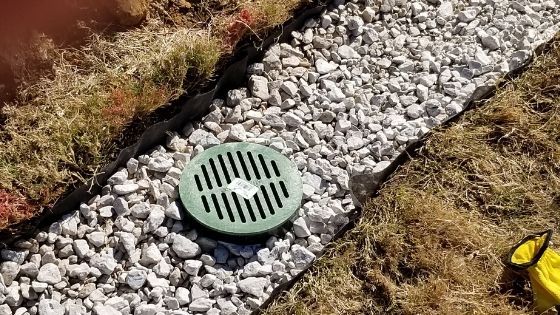
Routine maintenance preserves system capacity, prevents clogging, and extends service life while protecting investment in exterior drainage. Maintenance tasks address surface debris, sediment accumulation in catch basins, inspection of outlet points, and functional tests of sump pumps and alarms. A scheduled approach—monthly visual checks, quarterly clearing during high-debris seasons, and annual professional inspection—keeps systems operational and identifies minor problems before they escalate. For homeowners who prefer professional upkeep, seasonal service visits or maintenance contracts are widely available and can include debris removal, pump testing, and warranty checks for peace of mind.
Below is a checklist table mapping components to inspection frequency and recommended actions to aid routine maintenance planning.
| Component | Inspection Frequency | Common Issues | Recommended Action |
|---|---|---|---|
| Catch basins / grates | Monthly during leaf season | Debris clogging, sediment buildup | Remove debris, flush basin, annual sediment removal |
| Downspouts & extensions | Quarterly | Disconnected outlets, blockages | Reattach extensions, clear obstructions, ensure positive drainage |
| French drain outlets | Annually / after heavy storms | Outlet clogging, siltation | Inspect outlet flow, clear vegetative growth, professional jetting if needed |
| Sump pump & battery backup | Quarterly / pre-winter | Pump failure, battery depletion | Test pump operation, replace battery as needed, clean sump basin |
What Routine Inspections Are Needed to Keep Drainage Effective?
Routine inspections focus on visible collection points—grates, downspouts, catch basin lids—and on active components like sump pumps, ensuring they are clear, securely connected, and operating. Simple DIY checks include pouring water into inlets to confirm flow, listening for pump operation, and scanning outlet points for displacement or erosion. Frequency should increase during fall leaf drop and after storms when debris and sediment loads are highest. Early detection of reduced flow or standing water enables timely cleaning or professional service, preventing more costly excavation or replacement.
How Do You Troubleshoot Common Drainage Problems?
Troubleshooting begins with observing where water accumulates and tracing flow paths to find blockages, collapsed pipe, or poor grading; common fixes include removing surface debris, jetting or rodder cleaning for subsurface sediment, and regrading to restore positive slope. If a sump pump cycles frequently, inspect discharge lines for ice or blockage and test float mechanisms and electrical supply; persistent cycling may indicate higher groundwater than design anticipated. Persistent failures or recurring backups point to design limitations or undersized components and warrant professional reassessment. Clear diagnostic steps help homeowners distinguish temporary, fixable issues from those needing contractor intervention.
What Seasonal Preparations Are Recommended for Long Island Weather?
Seasonal preparations focus on fall leaf cleanup, pre-winter sump pump and battery checks, spring verification after freeze-thaw cycles, and repairs before the heavy rain season to ensure systems perform when needed most. Homeowners should clear gutters and catch basins before autumn storms, test sump pumps and battery backups before winter freezes, and inspect outlet discharge areas in spring for erosion or blockages. Having basic materials—rakes, a wet/dry vacuum for basin clearing, and spare downspout extenders—reduces downtime and eases rapid response following storms. These calendar-aligned tasks lower emergency repair risk and prolong system life.
Providers often offer maintenance contracts or seasonal service visits if homeowners prefer professional upkeep rather than DIY schedules.
What Are the Typical Costs and ROI of Exterior Drainage Systems in Long Island?
Understanding cost drivers and potential return on investment helps homeowners weigh the upfront expense against avoided repair and insurance claim costs. Key cost components include excavation labor, material quality (pipe, stone, fabric), disposal and restoration of landscaping, and any permit or inspection fees required by local authorities. Return on investment is realized through reduced frequency of basement water claims, avoided foundation repair, and preserved property value, with qualitative benefits like lower stress and uninterrupted use of living spaces during storms. Homeowners are advised to obtain detailed, itemized estimates from multiple contractors to compare scope, materials, and warranty terms.
The table below breaks down common cost factors and how they contribute to total installation price and long-term ROI considerations.
| Cost Factor | Attribute | Value / Impact |
|---|---|---|
| Labor & excavation | Site complexity, access, depth | Major portion of cost; difficult sites increase price |
| Materials | Pipe quality, stone, fabric, grates | Higher-grade materials raise initial cost but reduce lifecycle costs |
| Permitting & inspections | County requirements (Nassau vs Suffolk) | Variable administrative cost; handled by many installers |
| Landscape restoration | Sod, planting, hardscape repair | Adds to project total; proper restoration preserves curb appeal |
| Long-term ROI | Avoided repair/insurance claims | Investment reduces probability and cost of structural water damage |
What Factors Influence the Cost of Drainage Installation?
Major cost drivers include soil type and groundwater conditions that affect excavation difficulty, property access that impacts labor time, disposal requirements for spoils, material selections, and any necessary permitting or engineering. For example, compacted or rocky soils increase excavation time and equipment needs, while tight access may require manual trenching that adds labor cost. Material choices balance upfront cost against maintenance and lifespan; investing in higher-quality pipe and geotextile reduces long-term risk of failure. Planning for restoration of landscaping and driveways also contributes to final cost and homeowner satisfaction.
These cost influences shape typical ranges for common systems such as French drains.
How Much Does a French Drain Installation Cost in Long Island?
French drain cost varies with trench length, depth, soil type, and outlet distance—factors that determine excavation volume, material quantity, and labor hours—so quotes should be itemized to compare components. Homeowners should expect variability depending on whether lawn restoration, hardscape adjustments, or rock removal are required; additional costs for disposal or dewatering can occur for saturated sites. Requesting multiple, detailed estimates and clarifying warranty coverage helps compare value rather than just price. A site visit is necessary for an accurate, personalized cost estimate and to identify potential permitting needs.
Transparent quotes and documented warranties support assessing ROI relative to avoided damage costs.
What Is the Return on Investment for Protecting Your Home?
ROI for exterior drainage is primarily realized through avoided costs: fewer basement water damage incidents, reduced foundation repair likelihood, and preserved landscape and mechanical systems. Quantifying ROI involves comparing installation cost against typical repair costs homeowners would face in repeated flood events and against intangible benefits like marketability and reduced insurance disruption. Investing in preventive drainage often results in lower cumulative expenses over years compared with repeated emergency repairs. For many homeowners, the long-term financial and lifestyle benefits justify the upfront investment in properly designed drainage solutions.
Evaluating ROI should include the cost of routine maintenance and the potential value of professional warranties and post-installation support.
What Are the Most Frequently Asked Questions About Long Island Drainage Solutions?
This FAQ-style section answers common homeowner questions in brief, actionable terms to help with quick decision-making and to point readers to deeper sections for details. Each answer provides succinct guidance suitable for immediate application and for use as a checklist before contacting a professional.
What Are the Best Drainage Solutions for a Wet Yard in Long Island?
Best solutions depend on severity and soil: simple grading corrections and downspout extensions fit minor pooling, French drains address persistent subsurface saturation near foundations, dry wells collect and infiltrate roof runoff where soils permit, and channel drains handle concentrated surface flow on paved areas. Match the solution to symptom severity and soil permeability, and consider combining approaches for persistent problems. Review the Types section for decision guidance and consult a site assessment when in doubt.
This targeted matching helps homeowners choose appropriate interventions before engaging contractors.
How Do You Prevent Basement Flooding During Heavy Rains?
Prevent basement flooding by prioritizing exterior drainage to lower water reaching foundation walls, maintaining gutters and downspouts to prevent roof runoff concentration, installing or testing sump pumps with backup power, and sealing vulnerable wall penetrations. Immediate homeowner steps include ensuring positive surface grading and clearing debris from collection points prior to storm seasons. For persistent risk, schedule a professional site assessment to design integrated exterior and interior defenses.
These measures work best in combination; exterior-first strategies reduce reliance on active interior systems.
What Causes Poor Drainage Around a House and How Is It Fixed?
Common causes include improper grading that channels water toward the foundation, clogged gutters and downspouts that overflow, compacted or clay soils that resist infiltration, and failed or undersized subsurface drains. Fixes range from simple corrective grading and gutter cleaning to installation of French drains, channel drains, or sump systems where necessary. Diagnosing the root cause through flow mapping and soil checks guides effective, durable repairs rather than temporary patches.
Accurate diagnosis prevents repeated fixes and directs investment to the most impactful solution.
Are Permits Required for Drainage Installation in Long Island?
Permit requirements vary by scope and county—minor surface work often needs no permit while systems that alter drainage patterns or connect to municipal storm infrastructure may trigger approvals; Nassau and Suffolk counties each have their own review processes. Homeowners should check local county resources or ask prospective installers about permit handling; many contractors include permitting assistance as part of their service. When in doubt, obtaining formal guidance avoids compliance issues and ensures installations meet local regulations.
Knowing who handles permits reduces administrative burden and speeds project timelines.

A.M. Shield Waterproofing recently awarded the Basement Health Association STAR Award for exceptional customer care for the fifth year in a row. Servicing Long Island, NYC and Westchester with Nationally Certified Waterproofing and Mold Remediation Specialists they are able to provide the highest level of professional solutions. A.M. Shield has the widest range of services available to property owners in the greater New York area utilizing multiple techniques in exterior foundation waterproofing, interior drainage, foundation crack injections and foundation repair solutions,. A.M. Shield™s environmental division will assess the damage, repair the problem and create a healthy environment for property owners who experience mold or moisture problems.
