
Many homeowners find that basement water returns after repairs because the visible symptom was addressed without resolving the underlying driving forces such as hydrostatic pressure, poor surface and subsurface drainage, or structural foundation issues. This article explains why recurring basement leaks happen, how to diagnose the true root causes, and which comprehensive solutions actually stop water from coming back. You will learn to distinguish surface runoff from groundwater intrusion, recognize signs of plumbing- or appliance-sourced water, and evaluate when interior systems suffice versus when exterior excavation or structural repair is required. The guide maps homeowner checks, professional diagnostic tools, and durable fixes — from exterior membranes and French drains to interior perimeter drainage, sump pump redundancy, crack injection, vapor barriers, and humidity control. Read on for clear diagnostic steps, comparison tables that weigh lifespan and suitability, practical maintenance items, and the critical contractor questions that protect your investment in lasting basement dryness.
What Causes Basement Leaks After Waterproofing?
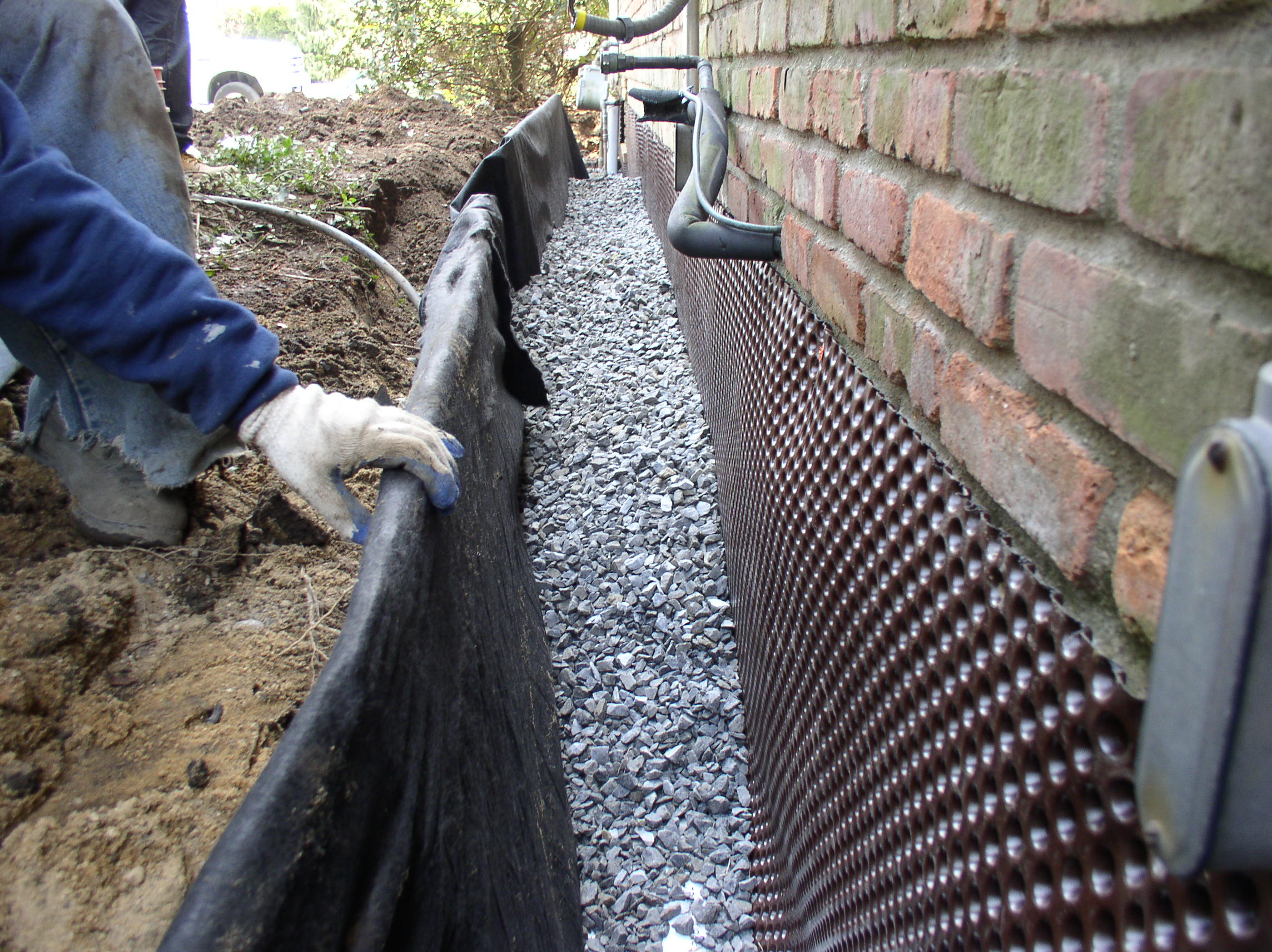
Basement leaks after waterproofing recur when the original repair treated symptoms rather than the dominant source of intrusion: moving groundwater, pressure, or internal plumbing. Common causes include ongoing hydrostatic pressure pushing water through joints or porous concrete, foundation cracks that reopen or were misdiagnosed, exterior drainage that channels water toward the foundation, sump pump failure or undersizing, and hidden plumbing or appliance leaks. Below is a concise summary and a targeted list of the top causes so you can quickly triage and prioritize follow-up action. Understanding these drivers helps homeowners and professionals choose solutions that remove water sources rather than merely sealing visible damp spots.
- Hydrostatic pressure forcing water through cracks, joints, and porous concrete.
- Foundation settlement or structural cracks that allow flow paths beneath seals.
- Poor exterior grading, clogged gutters, and downspouts that concentrate runoff near the foundation.
- Inadequate or failed interior drainage and undersized or non-redundant sump pumps.
- Plumbing backups, leaking appliances, or hidden supply/drain lines inside the foundation envelope.
Further research underscores the critical importance of addressing underlying construction and design flaws to prevent recurring basement issues.
How Does Hydrostatic Pressure Lead to Persistent Basement Water Problems?
Hydrostatic pressure is the weight and force of saturated soil and groundwater pushing horizontally and upward against foundation walls and floors, which creates conditions where water seeks the weakest path into a basement. When soil becomes saturated after heavy rain or snowmelt, that pressure increases and exploits joints, hairline cracks, block cores, or porous concrete to create steady seepage or active leaks. Surface-applied sealants and paint address vapor migration or minor seepage but do not relieve the lateral and uplift forces of hydrostatic pressure, so leaks reappear when pressure persists.
Recognizing hydrostatic-driven patterns—continuous flow near the floor-wall joint, active weeping through mortar joints, or water ingress during high groundwater periods—signals the need for drainage relief (exterior or interior) rather than cosmetic sealing.
Understanding hydrostatic mechanics naturally leads to inspecting structural openings that become pathways for this force, which is the focus of the next subsection on foundation cracks and porous materials.
Why Do Foundation Cracks and Porous Walls Allow Water to Return?
Foundation cracks—ranging from hairline shrinkage to larger structural separation—create direct flow paths that permit groundwater and even surface runoff to enter basements. Porous cast-in-place concrete, cinderblock cores, and deteriorated mortar allow capillary movement and diffusion; repeated freeze-thaw cycles, settlement, or lateral soil movement can widen these channels over time.
Identifying crack types matters: non-structural shrinkage can be sealed with urethane or epoxy, while structural movement may require reinforcement, helical anchors, or underpinning.
Signs such as efflorescence, vertical versus horizontal crack patterns, or stair-step cracks in masonry help differentiate cosmetic from structural issues and determine whether sealing, injection, or full foundation repair is the proper next step.
Recognizing crack behavior points to the importance of a systematic diagnostic approach that blends homeowner checks with professional testing, which is detailed in the next main section.
What Homeowners Often Miss About Recurring Basement Water Problems
Many homeowners miss that temporary fixes often address visible dampness without correcting the integrated systems that cause water intrusion, turning short-term relief into long-term frustration. Common oversights include relying solely on interior sealants, failing to evaluate exterior grading and gutter performance, ignoring intermittent plumbing leaks, and not factoring in hydrostatic pressure or subsurface flow patterns. Below is a short Q&A style summary of the most frequent homeowner mistakes and an explanatory list of routine maintenance and diagnostic omissions to help prioritize corrective steps.
- Treating the symptom (wet wall patch) instead of the cause (poor grading or pressure).
- Skipping an exterior drainage assessment that would reveal concentrated runoff toward the foundation.
- Neglecting to test sump pump redundancy or battery backups until after a power-loss event.
These oversights make it likely that water will return under similar weather or load conditions, so a broader systems perspective is necessary before declaring a repair successful. The subsections below explain diagnostic missteps and the specific role of grading and gutters in recurring leaks.
Why Is Inadequate Initial Diagnosis a Common Cause of Failed Basement Waterproofing Solutions?
Inadequate diagnosis happens when inspections rely only on interior visual cues and omit exterior grading, groundwater mapping, plumbing checks, or pressure testing—leading to an incomplete scope of work. Contractors or DIY approaches that skip moisture mapping, ignore downspout performance, or fail to observe the property during a rain event may recommend interior sealants where drainage relief is required. A proper diagnostic checklist includes grading evaluation, gutter/downspout inspection, interior perimeter drain inspection, moisture mapping, and, when indicated, infrared or camera inspections and soil probes. Failing to perform these steps often results in repeated repairs; documenting conditions and running tests up front increases the chance of selecting a durable, targeted solution.
Documenting a thorough diagnosis naturally leads to examining exterior drainage components, which is covered next because surface water management directly affects subsurface pressure.
How Can You Identify the True Root Causes of Persistent Basement Leaks?
A staged diagnostic approach combines homeowner triage with targeted professional tests to map sources and pathways of water intrusion so repairs address root causes rather than symptoms. Start with simple checks—observe during/after rain, inspect gutters and downspouts, run appliances and watch for water flow, and monitor the water meter for unexplained use—then escalate to professional tools like infrared imaging, camera inspections, soil probes, pressure testing, and flood simulation when the source remains unclear. Below is a numbered checklist of diagnostic steps you can follow to systematically isolate causes and an EAV table mapping common diagnostic methods to what each reveals, helping you decide which tests to commission.
- Check gutters, downspouts, and grading for surface runoff within 24 hours of heavy rain.
- Run appliances and check drains to rule out plumbing/appliance leaks.
- Observe seepage patterns (continuous vs event-based) and note locations relative to floor-wall joints.
- Engage professional infrared, camera, pressure, or soil probe tests when visual checks are inconclusive.
The recommended professional diagnostics below map specific methods to the intrusion types they detect, which helps determine the correct repair pathway.
| Diagnostic Method | What It Reveals | Typical Use |
|---|---|---|
| Infrared thermal imaging | Temperature and moisture differentials indicating hidden wet pockets | Locating damp areas behind finishes |
| Camera inspection (drain/foundation) | Blockages, joint failures, pipe leaks, interior voids | Inspecting internal drains and cavities |
| Soil probe / bore | Groundwater level and soil saturation | Assessing hydrostatic load and water table |
| Pressure / flood simulation | Response of drains and sump systems under load | Verifying interior system capacity |
This mapping clarifies why some tests are prioritized—temperature anomalies point to concealed moisture, while soil probes quantify external pressure that dictates whether interior drainage will suffice.
The next subsection explains what each advanced diagnostic method typically uncovers and how to interpret those findings when planning repair.
What Expert Diagnostic Methods Reveal Hidden Water Intrusion Sources?
Advanced diagnostics identify invisible pathways and quantify loads that inform durable repairs: infrared scans highlight hidden wet spots behind drywall or insulation, camera inspections of drain tiles reveal blockages or breaks, soil probes and test borings measure groundwater levels and soil permeability, and pressure/flood simulations show how existing drainage and sump systems perform under realistic loads. Each method answers a specific question—infrared locates moisture concentration, camera inspection checks interior conduit integrity, and soil probes reveal whether hydrostatic pressure is a persistent external force. Typical professional workflows combine two or more methods to cross-validate findings and produce a prioritized repair plan that addresses the dominant intrusion mechanisms rather than isolated symptoms.
How Can Homeowners Detect Plumbing Backups and Appliance Leaks Affecting Basements?
Plumbing and appliance leaks often mimic groundwater intrusion but usually follow usage patterns or correlate to specific fixtures; homeowners can detect these by observing when water appears, checking hoses and valves, and monitoring the water meter for unexplained flow.
Immediate checks include running the washing machine and watching floor drains, inspecting water heater and washing machine supply hoses for seepage, and shutting off the main to see if the interior leak stops. A simple bucket test of suspected drains and installing smart leak detectors or flow monitors identifies intermittent sources for plumber referral.
If these steps isolate a plumbing source, call a licensed plumber to repair lines and then reassess basement dampness in light of the eliminated internal source.
Detecting internal water sources completes the diagnostic picture and informs whether repairs should prioritize infrastructure fixes or systemic drainage improvements covered in the next major section.
What Comprehensive Solutions Stop Basement Water From Returning?
Stopping water from returning requires solutions that remove or redirect water sources and relieve hydrostatic pressure rather than simply sealing surfaces. Effective strategies include exterior excavation and membrane systems, exterior French drains to lower the water table, interior perimeter drainage systems that capture water before it enters living spaces, high-performance sump pumps with battery backups, and combined approaches for high-pressure sites. The table below compares exterior and interior waterproofing options by method, typical lifespan, average cost range, and suitability to help homeowners decide which approach fits their situation.
| Approach | Typical Lifespan | Average Cost Range | Suitability |
|---|---|---|---|
| Exterior excavation + membrane | 20–50 years | Moderate–High | Best for high hydrostatic pressure and repeating failures |
| Exterior French drain | 20–40 years | Moderate | Effective when downspouts/grade cannot be corrected |
| Interior perimeter drain + sump | 10–25 years | Low–Moderate | Good when exterior access is limited or combined with exterior work |
| Interior patching/sealants | 1–5 years | Low | Short-term; cosmetic or vapor control only |
This comparison shows why combined strategies are common: exterior methods prevent water from reaching the foundation while interior systems manage residual seepage and provide redundancy. Next, we describe exterior waterproofing techniques and their mechanisms.
How Do Exterior Waterproofing Techniques Like Excavation and Membranes Prevent Recurring Leaks?
Exterior waterproofing involves excavating to the footing, applying a continuous waterproof membrane to the foundation wall, and installing an exterior French drain at the footing level to intercept groundwater before it contacts the wall. This method prevents hydrostatic pressure from pushing water through the wall by redirecting groundwater into a drain system that discharges away from the foundation or into a sump. While excavation plus membrane is more invasive and costlier than interior-only solutions, it addresses the source of external pressure and is often recommended when repeated interior repairs fail or the water table is persistently high. Properly installed exterior systems also require periodic inspection of surface drainage and downspouts to maintain long-term performance.
What Role Do Advanced Interior Drainage Systems and High-Performance Sump Pumps Play?
Interior perimeter drainage systems (e.g., WaterGuard-style channels) collect groundwater that migrates into the foundation and channel it to a sump basin where a pump ejects water away from the house, relieving hydrostatic pressure acting on the floor and wall joints. High-performance sump pumps sized correctly and paired with battery backups or a secondary pump improve reliability during storms and power outages. Regular testing, float switch redundancy, and scheduled maintenance are critical to prevent pump failure from becoming a failure point. The table below compares sump pump options and attributes to help homeowners select appropriate redundancy for their risk profile.
| Pump Type | Horsepower | Redundancy Features | Best-Use Cases |
|---|---|---|---|
| Primary submersible pump | 1/3–1 HP | Single unit; reliable for routine loads | Typical basements with low to moderate inflow |
| Battery backup pump | N/A (battery-powered) | Operates during power loss | Areas prone to outages during storms |
| Dual-pump system (primary + secondary) | Combined | Automatic secondary kick-in | High-risk sites with frequent heavy inflow |
| Pedestal pump | 1/4–1/3 HP | Motor above water; easier maintenance | Lower debris environments; basement conversions |
Selecting the right pump strategy depends on expected inflow, power reliability, and tolerance for risk; pairing interior drainage with exterior controls yields the most robust protection. Understanding structural repair and humidity control complements these drainage methods, which is discussed next.
How to Partner with Professionals for Long-Term Basement Waterproofing Success
 Partnering with experienced professionals ensures diagnostics are comprehensive, solutions are matched to root causes, and warranties and maintenance plans protect long-term performance. Before hiring, homeowners should ask targeted questions about diagnostic methods, scope, references, warranty terms, and maintenance offerings; review written proposals that include expected lifespan, maintenance cadence, and performance guarantees. Below is a prioritized list of contractor questions with what satisfactory answers look like, followed by guidance on warranties and maintenance plans so you can evaluate bids and protect your investment.
- What diagnostic tests will you perform and why? Acceptable answer: a combination of exterior grading review, moisture mapping, and targeted professional testing as needed.
- Can you provide references and documented before/after photos for similar jobs? Acceptable answer: verifiable examples of work on comparable foundations and site conditions.
- What is the warranty scope and who is responsible for routine maintenance? Acceptable answer: clear product vs workmanship distinctions and recommended maintenance schedule.
These questions reduce risk and clarify expectations; next we describe warranty and maintenance considerations and what to insist on in proposals.
What Key Questions Should Homeowners Ask Waterproofing Contractors?
Ask contractors to describe their diagnostic process, the specific repair methods proposed, the expected lifespan of installed systems, references for similar work, and the warranty and maintenance terms in writing. Green flags include proposals that demonstrate diagnostic testing (grading, moisture mapping, camera/infrared when applicable), clear scopes that separate exterior and interior work, and explicit maintenance recommendations. Red flags include estimates based only on a quick visual check, vague warranty language, or refusal to provide references. Requesting an itemized contract with payment milestones tied to completion of phases and verification of work helps ensure accountability and reduces the chance of incomplete repairs.
How Do Warranties and Maintenance Plans Ensure Lasting Protection?
Warranties typically fall into product warranties (manufacturer-backed) and workmanship warranties (contractor-backed); understanding the duration, exclusions, and transferability is essential. A solid maintenance plan includes periodic sump pump testing, battery backup checks, gutter cleaning, downspout extension inspections, and yearly system checks that document performance. Keeping maintenance records and photo proof of completed service helps when filing claims and demonstrates adherence to recommended care. Regular maintenance prevents foreseeable failures (pump seizure, clogged drains) and provides documentation that preserves warranty coverage and supports long-term system reliability.
Maintenance and clear warranty terms protect your investment and complete the homeowner’s path from accurate diagnosis through durable repair and ongoing care.

A.M. Shield Waterproofing recently awarded the Basement Health Association STAR Award for exceptional customer care for the fifth year in a row. Servicing Long Island, NYC and Westchester with Nationally Certified Waterproofing and Mold Remediation Specialists they are able to provide the highest level of professional solutions. A.M. Shield has the widest range of services available to property owners in the greater New York area utilizing multiple techniques in exterior foundation waterproofing, interior drainage, foundation crack injections and foundation repair solutions,. A.M. Shield™s environmental division will assess the damage, repair the problem and create a healthy environment for property owners who experience mold or moisture problems.
